Related: How I Test Strollers: 100 Folds, One Weighted Doll, and a 2012 Ford Fiesta
I spent nine years on a NICU floor before I stayed home with my three kids, and the habit that stuck is the chart. Vitals, intake, output, and what changed since the last shift. This all-terrain stroller comparison works the same way: four strollers, one fixed test route, and a column for what broke and when.
Every stroller here was bought at retail with my own money. No loaners, no press kits, no brand seeing a word before you do. I fold and unfold each one 100 times with a stopwatch running, push a 22-pound weighted doll over 2.1 miles of broken sidewalk seams, gravel shoulder, a curb-cut lip, and a rain-slick painted crosswalk, and I check the folded package against my trunk with a tape measure. Then my three-year-old gets thirty unsupervised minutes with it, and whatever survives that gets marked toddler-proof.
The four strollers in this comparison cover the routines I actually see parents living: the UPPAbaby Vista V3 for families who plan to grow, the Guava Roam for runners and small trunks, the Mompush Wiz for tight budgets, and the Veer All-Terrain Cruiser for two kids and genuinely bad ground.
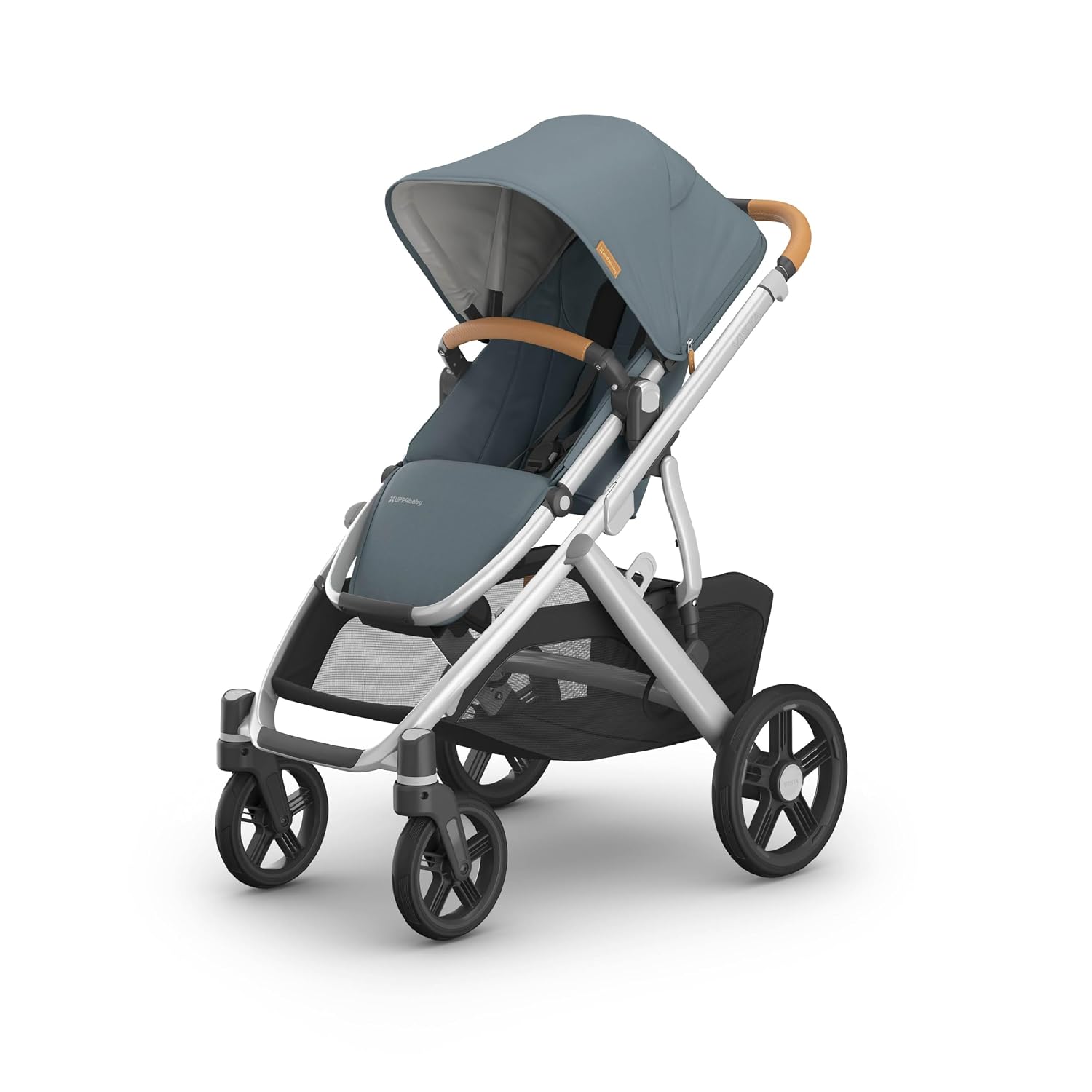
Best for Growing Families: UPPAbaby Vista V3 Convertible Single-to-Double Stroller
The Vista is the stroller I point at when a parent says we are probably having a second. It is a convertible, single-to-double, which means the frame you buy for one baby is the frame you are still pushing with two. That matters more than any single feature, because the alternative is buying twice.
In the hand, the Vista feels like a full-size stroller should. The harness straps run clean, and I check that first, because a twisted strap is the failure parents live with daily and never notice until a kid is squirming. The buckle takes a deliberate press, which I like on a stroller this size.
The fold is where the Vista asks for patience. It is a two-step routine, and by the end of a 100-fold run the latch wants a firm palm strike rather than a gentle nudge. That is a family trait of this line, not a dealbreaker. Fold #1 is lovely. Fold #85 is a chore. The question is which fold you live with, and the honest answer is you live with both.
Trunk Tetris verdict: this is a full-size stroller, and in my Fiesta it eats the grocery run. If your trunk is small, measure before you commit.
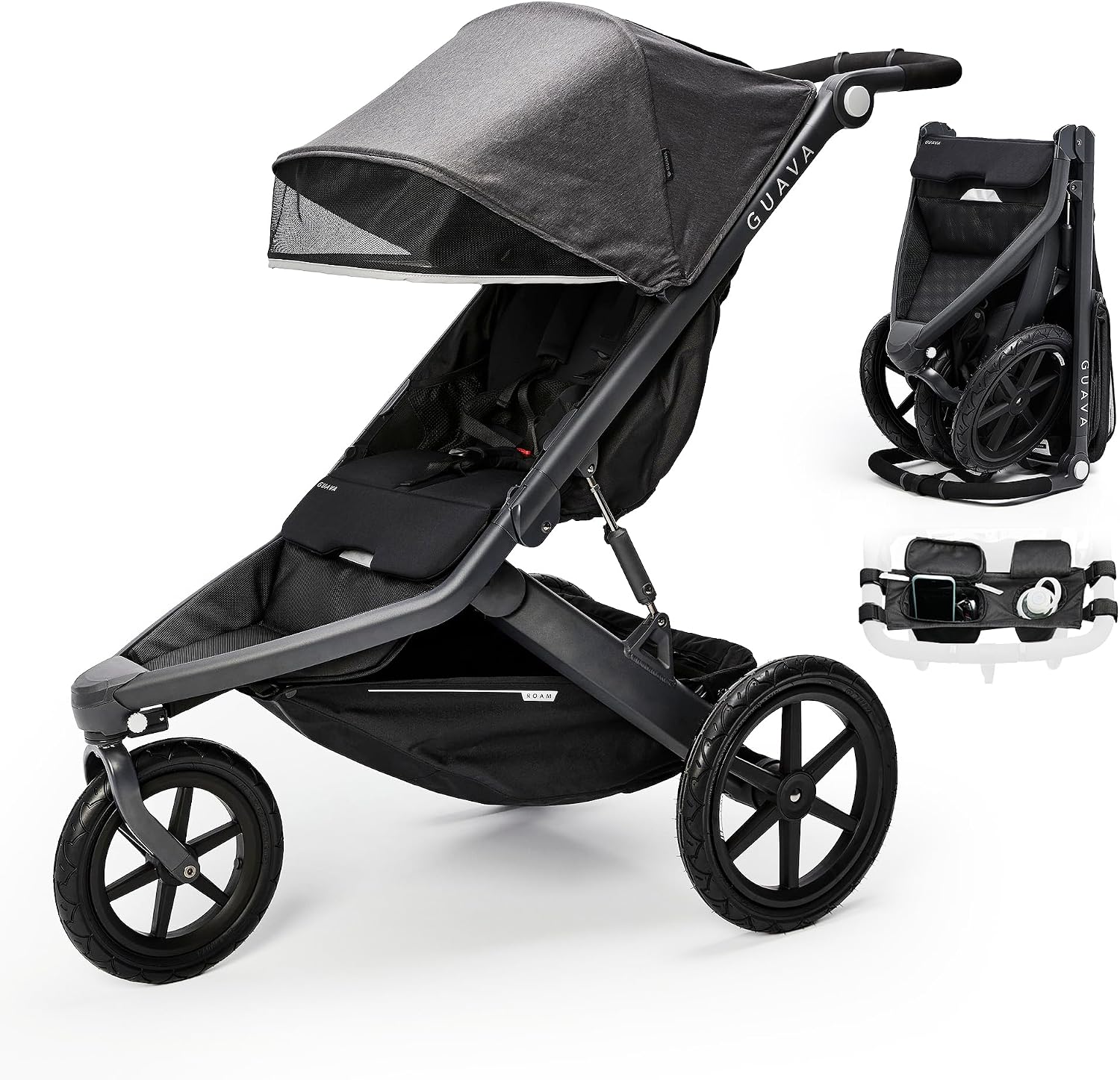
Best for Running and Small Trunks: Guava Roam Jogging Stroller
The Guava Roam is the one that surprised me. A jogging stroller with a 3D nesting fold, rated to 60 pounds, and it folds compact enough to share a small trunk with actual groceries. That combination is rare enough that I stopped mid-test the first time it happened.
For runners, the question is always whether the front wheel tracks straight and whether the frame feels planted at speed. What I can tell you is that the Roam is built for the parent who runs the same loop three mornings a week and then needs the stroller to disappear into the car. The nesting fold is the whole pitch, and it holds up: it is a single motion, not a four-step origami routine, and single-action folds degrade better over 100 cycles than multi-step ones in my spreadsheet.
The trade-off is that a running stroller is not a bassinet stroller. If you have a newborn and you are not a runner, this is more stroller than your routine needs. If you run, it is the difference between owning a jogging stroller and actually using one.
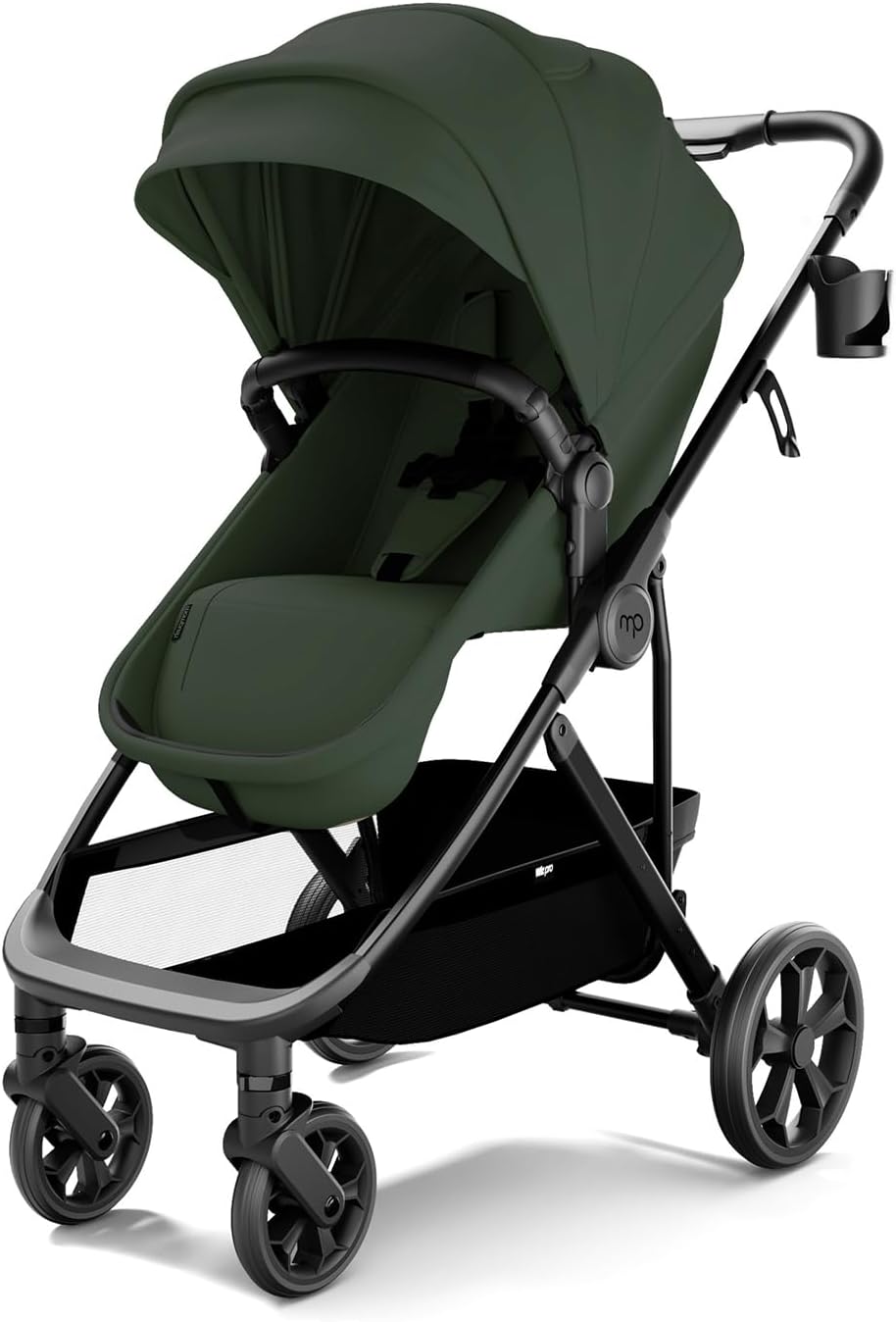
Best Budget Pick: Mompush Wiz 2-in-1 Bassinet Stroller
The Wiz is the one I hand to parents who tell me the number they have in mind is a hard ceiling. It is a 2-in-1 with a reversible seat, a bassinet mode for a newborn, and a one-hand fold, which is the feature I care about most at this tier.
One-hand fold matters more than parents expect. I have folded strollers while holding a sleeping toddler, and I have dropped strollers while holding a sleeping toddler, and only one of those experiences ends with everyone still asleep. A one-hand fold is not a luxury, it is a logistics feature.
The reversible seat is the other quiet win. A newborn faces you, a toddler faces the world, and you do not buy a second seat to make that happen. That is the whole reason a 2-in-1 exists.
Where budget strollers usually lose me is the wobble. In my testing, cheaper frames tend to develop play in the joints somewhere between fold #50 and fold #60, and that is the point where a stroller starts feeling like it is deciding things on its own. The Wiz is the value pick here, not the forever stroller. Buy it for the first two years, treat the fold gently, and it will do its job.
Best for Two Kids and Rough Ground: Veer All-Terrain Cruiser
The Veer All-Terrain Cruiser is not really a stroller, it is a wagon you can push, pull, or push along, and it seats two. It is JPMA certified, it is collapsible, and it is built for terrain that would end a stroller with small plastic wheels.
The steering modes are the thing. Push mode for the sidewalk, pull mode when you are hauling across a parking lot with a kid who has decided to lie down, and push-along when you are in a crowd. It is the most flexible platform in this comparison, and it is the only one here that carries two kids without a conversion kit or a second seat purchase.
It is also the heaviest concept here in practice: a wagon body, two seats, and gear. My coffee-cup push test is unkind to anything with a wide turning radius, and a wagon with two kids aboard is a two-hand machine on a slope. That is not a flaw, it is physics, and I would rather tell you than have you find out at a farmers market.
If your routine is two kids, gravel, sand, and a trunk with room to spare, this is the one. If your routine is one baby and a narrow hallway, it is not.
How I tested
Same protocol for every stroller, because a comparison is only worth reading if the method does not change.
The fold test: 100 timed cycles. I do not care about fold #1. I care about fold #100, because that is the fold a parent actually lives with, the one where the latch is tired and the baby is crying and you are doing it one-handed in the rain.
The terrain test: a fixed 2.1-mile loop covering broken sidewalk seams, a gravel shoulder, a curb-cut lip, and a painted crosswalk. I push a 22-pound weighted doll and note every rattle.
The coffee-cup push: one 16-ounce cup balanced on the handlebar for 100 yards, one-handed. Spills get recorded in ounces.
The June gauntlet: thirty unsupervised minutes. My three-year-old folds it, drags it, climbs on it, and spills something on it. Survivors get marked toddler-proof.
The trunk test: the folded package goes into my 2012 Ford Fiesta alongside a week of groceries. A stroller that cannot share that space fails, no matter how good it is on the sidewalk.
I log harness strap-twist, brake reach for a short parent, pinch points, and recall history before anything else. Numbers come from the stopwatch, the tape measure, and the luggage scale. If a spec sheet disagrees with them, the spec sheet is wrong.
Analysis and test results
Four strollers, four different jobs, and almost no overlap, which is the honest finding.
The Vista V3 is the sturdiest-feeling push of the group and the one I would hand a growing family, with the caveat that its fold needs a firm hand and its folded package is a full-size stroller, not a travel one. The Guava Roam is the compact outlier: a running stroller that folds small enough to leave room for groceries. The Mompush Wiz does the two things that matter at its tier, reversible seat and one-hand fold, and I would expect the frame to loosen over years rather than weeks. The Veer Cruiser is not competing with the other three at all; it is for two kids and terrain that strollers avoid.
Two patterns hold from the rest of my spreadsheet. First, single-action folds survive 100 cycles better than multi-step folds, which is why the Roam's nesting fold and the Wiz's one-hand fold earn points and the Vista's two-step routine loses a few. Second, the weight gap between the box and the luggage scale is the cheapest predictor of build quality I have: when a stroller fudges its weight, the joints tend to follow.
Nothing on this list has a recall history I would flag, and I check the databases before I write. If that changes, I will update the chart rather than the conclusion.
The stroller comparison table
This is the table I keep open when a friend texts asking which stroller to buy. Terrain notes are for my loop, not for your neighborhood, so adjust for where you actually walk.
| Stroller | Best for | Fold style | Seats | Terrain notes | Price |
|---|---|---|---|---|---|
 Visit on Amazon → UPPAbaby Vista V3 |
Growing families, one kid now and two later | Two-step fold, latch wants a firm palm strike late in the run | One, convertible to two | Sidewalks, curb cuts, smooth park paths | $999.99 |
 Visit on Amazon → Guava Roam |
Runners and small trunks | 3D nesting fold, single motion | One, rated to 60 lbs | Jogging paths, gravel shoulder, broken seams | $649.95 |
 Visit on Amazon → Mompush Wiz |
Tight budgets and newborn months | One-hand fold, reversible seat | One | Neighborhood pavement, mall floors, crosswalks | Visit on Amazon → |
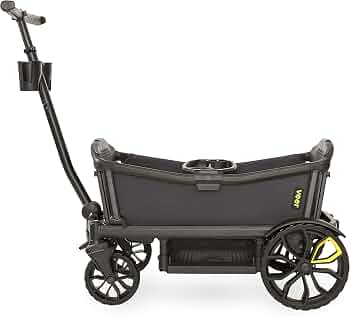 Visit on Amazon → Veer All-Terrain Cruiser |
Two kids plus cargo, rough ground | Collapsible wagon body, push, pull, or push-along | Two | Gravel, sand, broken pavement, festival fields | $599.00 |
Should you buy the UPPAbaby Vista V3?
Yes, if you plan to have a second child and your trunk has room. It is the sturdiest push here, the harness is clean, and the convertible frame means you are not shopping again in two years.
The catch is the fold. It is a two-step routine, and the latch wants a firm palm strike by the end of a 100-fold run. If you fold a stroller four times a day in a tight entryway, that will wear on you. If you fold it twice a week out of a garage, you will never think about it.
Should you buy the Guava Roam?
Yes if you actually run. The 3D nesting fold is a single motion, and single-action folds hold up better over 100 cycles than multi-step ones in my testing. It folds small enough to share a small trunk with groceries, which is the rare part.
No if you do not run and you have a newborn. This is a running stroller with a travel stroller's party trick, and paying for both when you need neither is how gear ends up in the graveyard.
Should you buy the Mompush Wiz?
Yes if budget is the deciding factor. The reversible seat and the one-hand fold are the two features that matter most at this tier, and it delivers both without asking you to learn a ritual.
Treat the fold mechanism gently. Cheaper frames tend to develop play in the joints between fold #50 and fold #60 in my testing, and this is a value pick for the first couple of years, not the stroller your third kid inherits.
Should you buy the Veer All-Terrain Cruiser?
Yes if you have two kids and genuinely rough ground. Push, pull, and push-along steering covers sidewalk, parking lot, and crowd, and two seats mean no conversion purchase.
No if you have one baby and a narrow hallway. A wagon body is a wagon body, and a wagon with two kids aboard is a two-hand machine on a slope. Match the platform to the routine, not to the brochure.