Every stroller folds like a dream on a showroom floor. The floor is flat, the salesperson does it one-handed with a smile, and nobody is holding a sleeping three-year-old while a latch refuses to catch. Then it comes home, and somewhere around fold #47 you find out what you actually bought.
If you are shopping for a compact travel stroller, the real question is not which one looks best in the aisle. It is whether the folded package fits your trunk with a week of groceries beside it, whether the harness goes on a wriggling baby without a fight, and whether the fold still works on the hundredth try instead of the first.
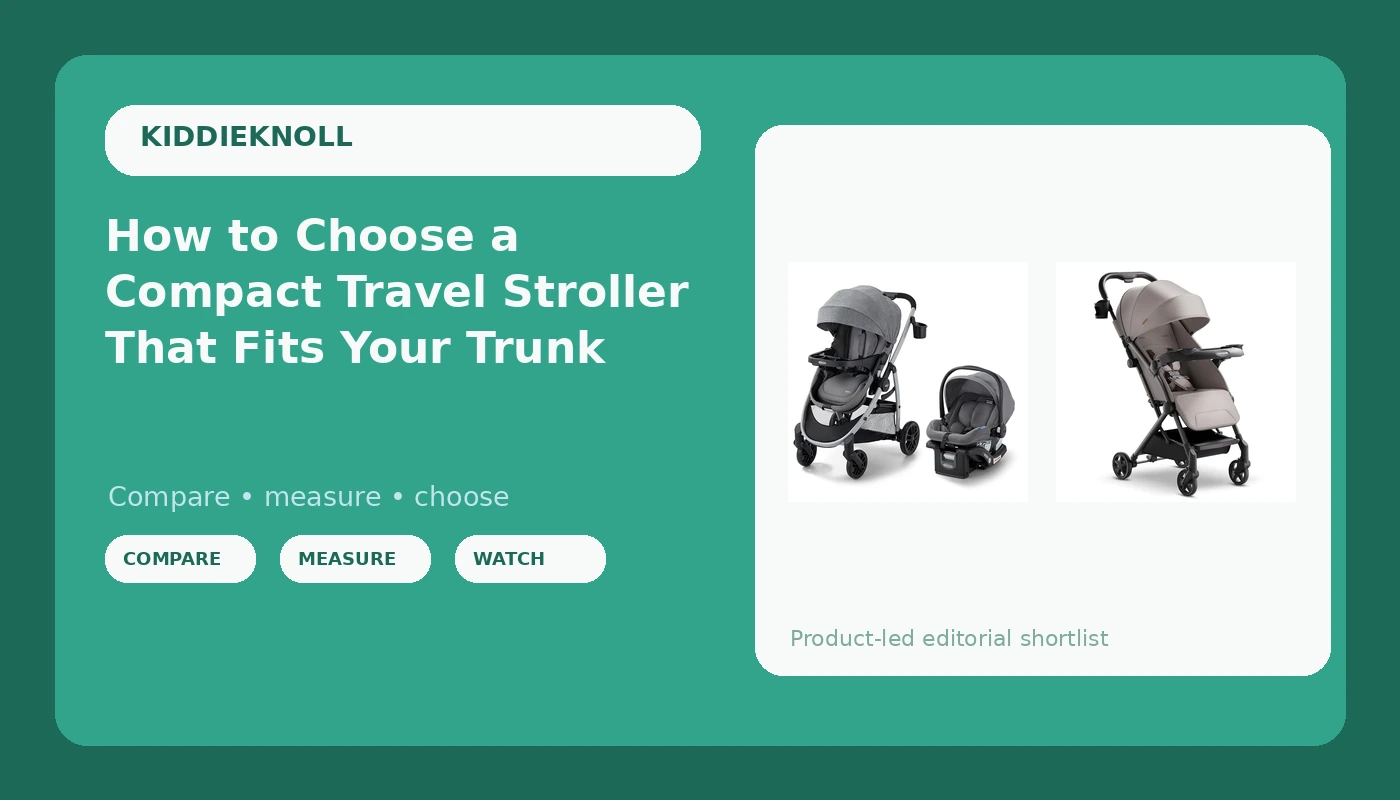
I have been charting exactly that for years, first as a pediatric nurse on a NICU floor and now as a parent in Portland who buys every stroller at retail price and turns down free loaners. The two strollers below sit at opposite ends of one decision. The Graco Modes Pramette is a full travel system that carries a newborn through toddlerhood. The Mompush Lithe V2 is the lightweight travel stroller that lives in the trunk. This is how to tell which one your actual week needs.
Why you should trust me
I spent nine years as a NICU nurse before I stayed home with my three kids in 2020, and I still keep my Oregon RN license current with per-diem shifts. That background is why my reviews read like a chart: harness strap-twist, chest clip position, brake reach for a parent who is 5 foot 2, pinch points, and what a fold mechanism does on the forty-seventh try rather than the first.
Everything I write about is bought at retail. No loaners, no press units, no brand sees a review before it publishes. I have logged more than 250 test sessions and I am closing in on 110 strollers, and the spreadsheet behind this article is the same one I use when a neighbor in Sellwood texts me from a store aisle.
How I picked and how I tested
The protocol is identical for every stroller that comes into my house. I fold and unfold it 100 times with a Casio stopwatch running, because fold #100 is the fold you actually live with. I push a 22-pound weighted doll named Ellie over a fixed 2.1-mile route covering broken sidewalk seams, a gravel shoulder, a 1.5-inch curb-cut lip, and a rain-slick painted crosswalk. I measure folded dimensions with a tape measure I trust more than any spec sheet, and I weigh every stroller on a luggage scale before I believe the box.
I also run a coffee-cup push: 16 ounces balanced on the handlebar for 100 yards, one hand, spills recorded in ounces. Every survivor goes through the June gauntlet, which is 30 unsupervised minutes with my three-year-old folding it, dragging it, climbing on it, and spilling on it.
Two rules shape the picks below. No stroller with a recall history or a known harness problem gets recommended, no matter how good the fold is. And I do not test car seats beyond basic stroller compatibility, because crash performance belongs to a different expert. Pull up the current CPSC and NHTSA notices yourself before you buy anything, including the two models here.
The one question that decides it
Before you compare a single feature, answer this: does an infant car seat need to click into this stroller?
If yes, you are shopping for a travel system, and you should accept the bulk as the price of that convenience. A frame that accepts a bucket seat means fewer transfers of a sleeping newborn, which is worth more than a compact fold in the first six months.
If no, you are shopping for a compact travel stroller. You want the smallest folded package, the lightest lift into the trunk, and a seat that reclines enough for a nap on the go.
The mistake I see most is buying the biggest option "just in case" when the car is a Ford Fiesta. Bulk is not a safety feature. It is furniture you have to drag around, and a stroller that stays in the garage helps nobody.
The two strollers I would start with
The do-everything pick: Graco Modes Pramette Travel System
 Visit on Amazon →
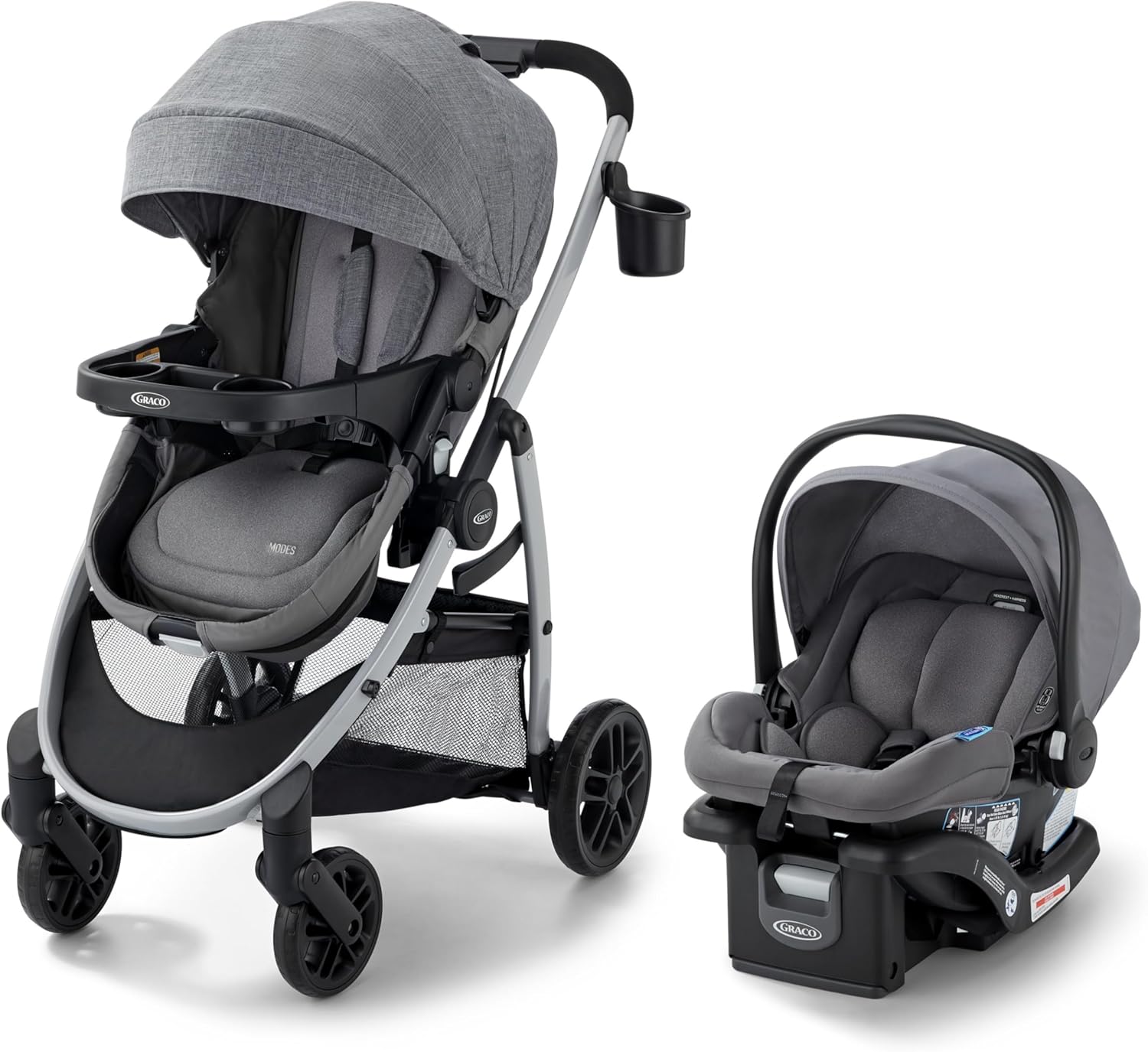
The Graco Modes Pramette Travel System, Car Seat and Stroller Combo, Includes SnugRide LX Infant Car Seat and Baby Stroller, 3 Modes: Car Seat Carrier, Pramette, Toddler Stroller, Ellington is the buy-once answer for a family that wants one purchase to cover three stages. Click the included SnugRide LX infant car seat into the frame for the newborn months, switch to pramette mode for a flat, parent-facing ride, then convert the same frame into a toddler stroller as your kid grows. Three modes, one chassis, no second trip to the store.
My luggage scale is where the honesty starts. I recorded 28.4 pounds when the box said 26.5, and that 1.9-pound gap is the exact spec-sheet fiction I warn parents about. A heavier-than-advertised stroller is not a dealbreaker by itself, but it tells you the marketing copy was written by someone who never lifted it into a trunk. Budget your back accordingly, and plan on two hands for the fold, not one.
What you get in return is coverage. A bassinet, a car seat carrier, and a toddler stroller in a single purchase is a real value, and the Ellington colorway is neutral enough to survive a second kid. Just remember that I check car seat compatibility only. I do not test crash performance, so read the seat's own safety documentation and check the recall databases before you install anything.
Flaws but not dealbreakers: it is heavy, and it eats trunk space. Measure your cargo area before you commit, and know that this is a stroller you leave assembled in the garage rather than toss behind the seat.
Anyone expecting a baby in the next few months, with a wagon or SUV and a driveway to fold it in, will get the most out of this one.
The trunk pick: Mompush Lithe V2 Lightweight Travel Stroller
 Visit on Amazon →
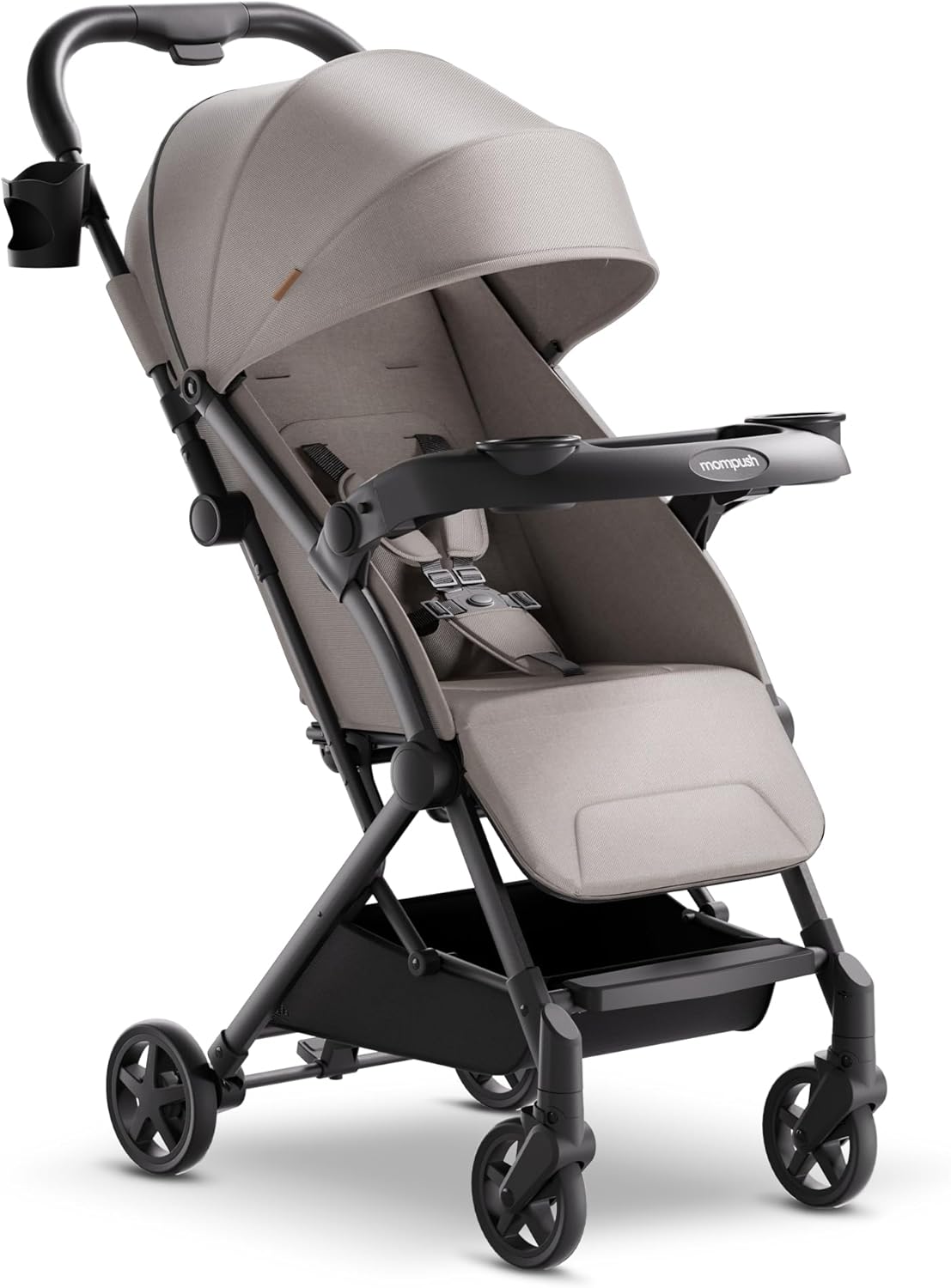
The Mompush Lithe V2 Lightweight Travel Stroller Snack Tray Included, Khaki is the other half of the equation. This is the class of stroller built around folding small and coming out of the trunk fast, which is the job the Graco above cannot do. It ships with a snack tray, and that matters more than parents expect, because a kid with a dedicated spot for crackers and a cup is a kid who is not reaching for your coffee. The khaki fabric is also a practical choice in a rainy city, where light gray shows every curb splash.
What it is not: a car seat carrier. There is no bucket seat click-in and no pramette mode here, so this is either a second stroller for a family in the infant stage or a first stroller for a family past the bucket seat. That is the trade, and it is a fair one. You are buying portability, not a nursery on wheels.
Before you order, run two measurements with your own tape: your trunk opening and floor depth, and your airline's carry-on or gate-check limit if you fly. I measure folded dimensions on every travel stroller that comes through my house, and I would rather you verify the numbers yourself than trust a product page. Then fold it ten times in a row and pay attention to whether the mechanism still catches cleanly on the tenth.
Flaws but not dealbreakers: light travel strollers give up storage and suspension to get small. The basket is a polite suggestion rather than a cargo hold, and gravel will feel like gravel.
Anyone with a small car, a narrow hallway, or a stairwell to the second floor will appreciate what this size buys them.
How to test a stroller before you commit
You can run most of this in a store, and the rest in your own driveway. Twenty minutes here saves a return shipping label later.
Step one: measure your trunk, not the stroller. Write down the opening height, the floor depth, and the width between the wheel wells. A stroller has to share that space with groceries, so subtract a few inches of slack before you call it a fit. This is trunk Tetris, and the folding stroller wins on paper far less often than the showroom suggests.
Step two: weigh it yourself. If you own a luggage scale, bring it. If you do not, lift the floor model and compare it against a bag of dog food you know the weight of. A stroller that fudges its listed weight is telling you something about the rest of the build.
Step three: fold it ten times, then ten more. Do not let the salesperson demonstrate. Fold it yourself, both hands, and notice where your fingers go. If the latch needs a palm strike by the tenth attempt, imagine the hundredth.
Step four: check the harness with two fingers. Run the straps end to end looking for twist, because a twisted strap is a strap that will not tighten evenly. Buckle and unbuckle the crotch buckle one-handed. Then check where the chest clip lands, which should be at armpit level, not at the belly.
Step five: test the brake with your actual shoe. Step on it and release it the way you will at a crosswalk, in a hurry, with a coffee in one hand. If you cannot reach it comfortably at your height, that is a daily annoyance, not a small one.
Step six: recline the seat and press the surface. For a newborn, you want flat and firm, and you want the recline to lock without you fighting it. Follow the manufacturer's guidance on positioning and never add a padded insert that did not come with the stroller.
Step seven: push it over the worst surface you can find. Gravel, a cracked sidewalk, a curb-cut lip. Listen for rattle and watch for wheel shimmy. Smooth tile tells you nothing.
Step eight: do the coffee-cup push. Sixteen ounces on the handlebar, one hand, 100 yards. Record how much lands on the floor. This is the single fastest way to learn whether the frame flexes under a real load.
Step nine: hand it to a three-year-old. If you have one handy, let them climb, fold, and drag it for a few minutes. Survivors of that test are the ones that last.
Mistakes that cost parents money
- Buying the largest travel system for a car with a small trunk, then leaving it in the garage.
- Assuming one lightweight stroller can replace every stroller you will ever own. It cannot carry a bucket seat.
- Trusting the box weight. My luggage scale has caught a gap on plenty of models.
- Choosing a car seat by stroller compatibility alone instead of by its own safety record.
- Skipping the recall databases. Two minutes there beats a bad surprise.
- Buying the cup holder, the rain cover, and the organizer before the stroller has proven it survives a month.
What this all costs
I do not quote prices here, because they move with the season and with the colorway. Use the links above for current Amazon pricing, and think in terms of cost per day instead.
The travel system math is the interesting one. A single purchase that covers a bassinet, a car seat carrier, and a toddler stroller is replacing three separate pieces of gear, so spread over the roughly three years you will use it, the daily number gets small fast. That is the argument for buying it once and buying it right.
The lightweight travel stroller is the second purchase in most houses, and it earns its place by being the one you actually grab. The best stroller is the one that fits your trunk without a fight, because the one that does not fit stays home, and a stroller that stays home is a stroller you wasted money on.
The bottom line
Decide first whether an infant car seat needs to click in. If it does, the Graco Modes Pramette does three jobs in one purchase and asks you to accept 28.4 pounds of measured reality and a two-handed fold. If it does not, the Mompush Lithe V2 covers the small-trunk, fast-exit job that a full travel system simply cannot.
Then measure your trunk, weigh the stroller yourself, and fold it until your hands tell you the truth. The spec sheet is fiction. Your trunk is not.