Related: Stroller Folds That Survive a Toddler: What to Check Before You Buy
Graco travel system strollers are the ones most parents end up comparing, because the bundle math is hard to argue with: an infant car seat and a stroller in one box, usually for less than a premium stroller costs by itself. I spent nine years as a pediatric nurse on a NICU floor, and I have spent the years since buying strollers at retail and running them through the same protocol. The bundle is not the decision. Whether the thing folds, fits, and holds up is the decision.
My protocol does not change. I fold and unfold a stroller 100 times with a stopwatch running, because fold #1 is marketing and fold #100 is your Tuesday. I push a 22-pound weighted doll over a fixed 2.1-mile route I call the Ellie loop, which covers broken sidewalk seams, a gravel shoulder, a 1.5-inch curb-cut lip, and a rain-slick painted crosswalk. I weigh every stroller on a luggage scale and measure folded dimensions with a tape measure I trust more than any spec sheet. If a manufacturer fudges the weight, I find out.
The four strollers below are not four versions of the same thing. They cover four different jobs: a first baby, a growing family, two kids at once, and a small trunk. Here is how each one is built, and what I would verify before you commit.
Best for a First Baby: Graco Modes Element Travel System
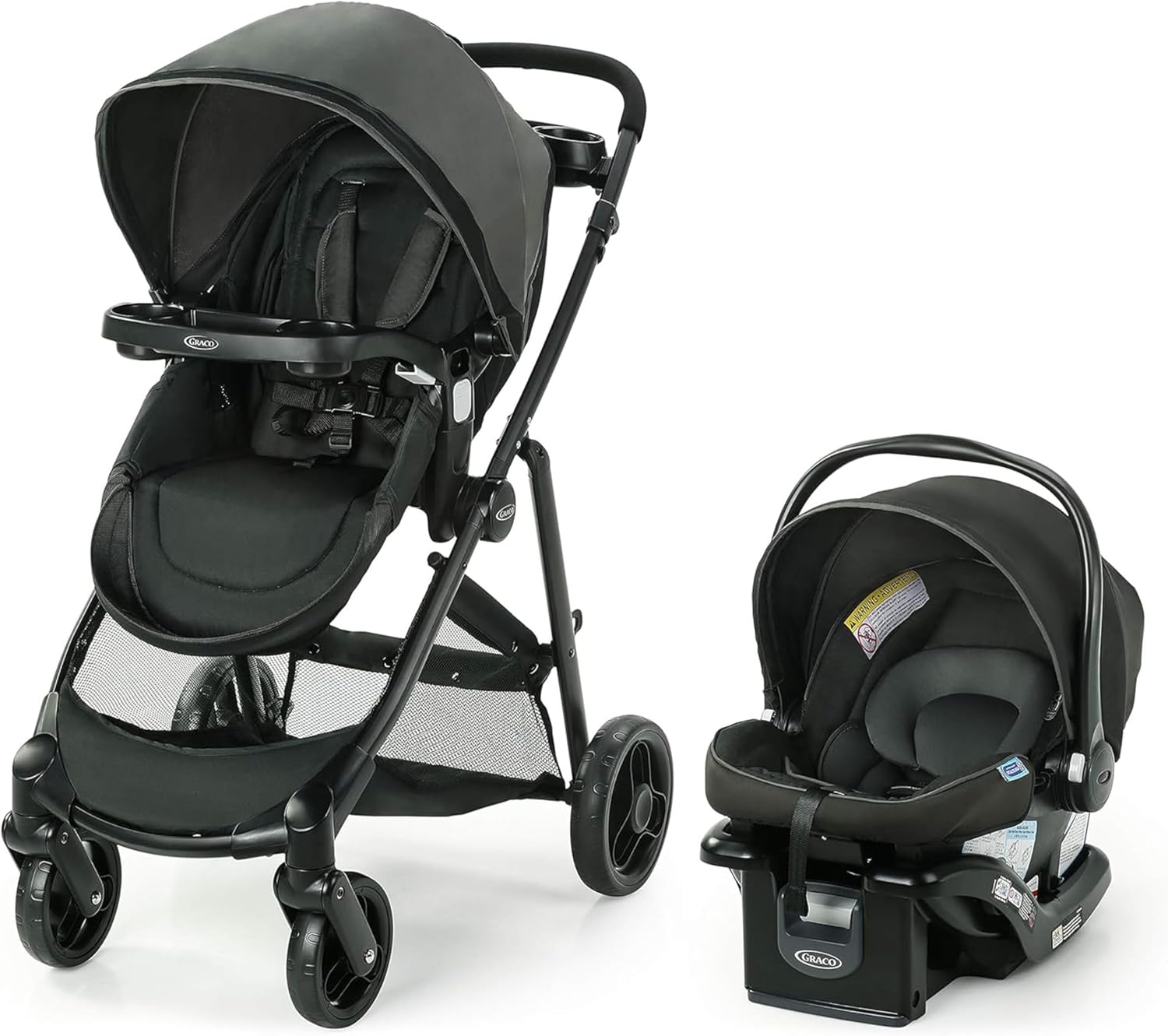
This is the one I point first-time parents toward when they want a single purchase that covers the first year. It arrives as a combo: a SnugRide Lite LX infant car seat plus a stroller whose seat reverses, so a newborn can face you and a curious older baby can face the world. Reversibility matters more than parents expect. A seat that only faces forward turns every walk into a head-crane.
The thing I would verify first is the fold. Travel systems in this class tend to use a multi-step fold, and multi-step folds are the ones that start asking for a palm strike somewhere between fold #40 and fold #80. That does not make it a bad stroller. It makes it a stroller you should fold ten times in the store before you commit, and it makes the latch the first part I would watch over a year of use.
Two boundaries of mine apply here. I do not test car seats beyond basic compatibility, because that is a different expert's job and I say so plainly. And I never recommend a stroller with a live recall or a known harness issue, no matter how good the fold is, so run the model number through the recall databases before you buy rather than after.
Best for a Growing Family: Graco Modes Nest Travel System
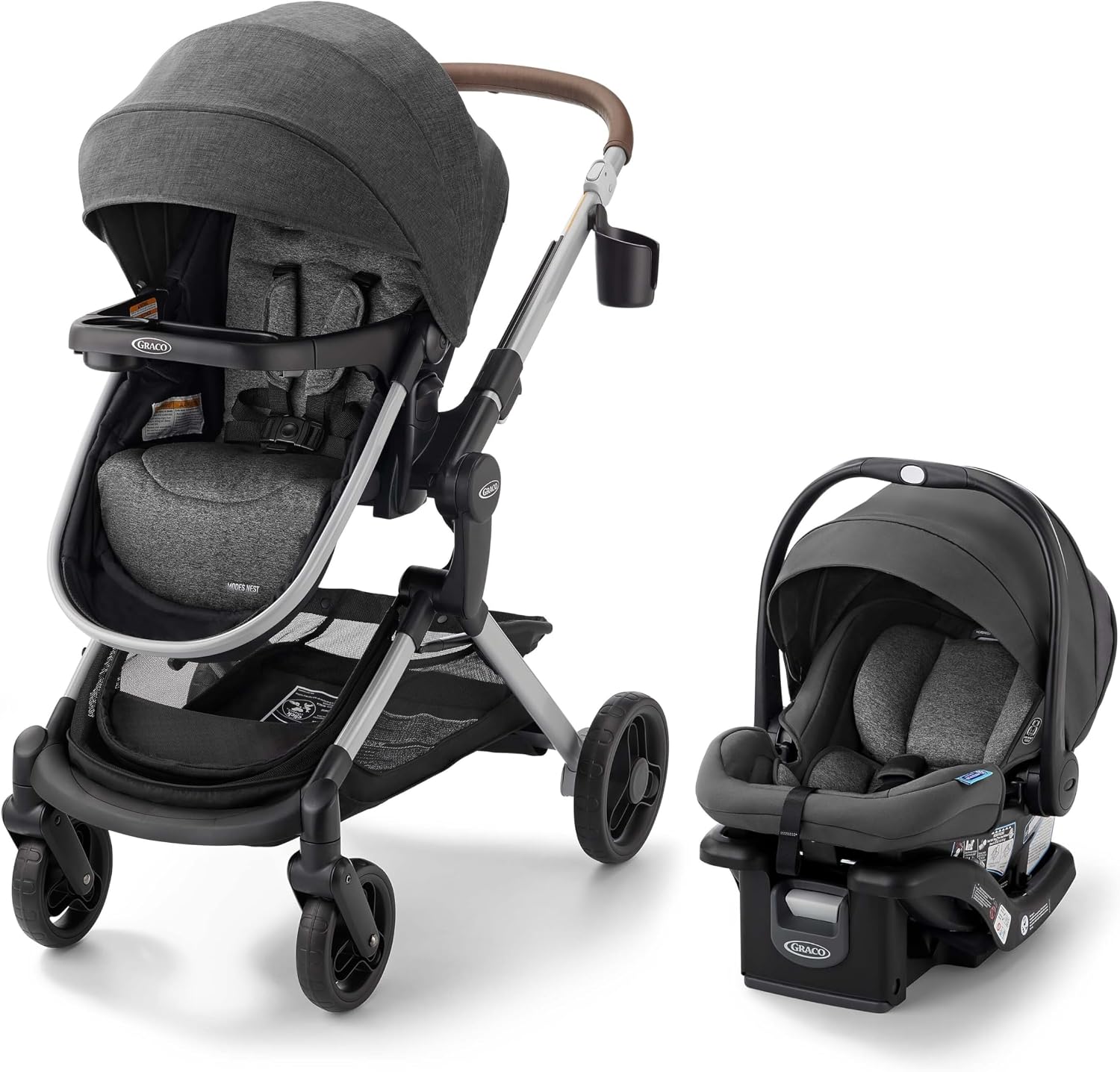
The Modes Nest is the modular version of that same idea, and the feature worth understanding is the adjustable Slide2Me car seat carrier. The carrier slides between positions rather than locking into one spot, so the infant seat can sit closer to you or further out depending on how you are walking that day. For a shorter parent, or for anyone who has ever tried to soothe a baby while pushing, that adjustability is not a gimmick. It changes where the weight sits relative to your hands.
It is a 3-in-1: infant car seat with the SnugRide DLX, then the stroller seat, then the toddler configuration as your child grows. That progression is the reason this one holds its value in a household that plans on more than one child. You buy it once and it keeps changing shape.
The trade is complexity. Every extra configuration is another joint, another latch, another place for a mechanism to loosen. On my spreadsheet, the strollers that fail by fold #100 are almost never the simple ones. So when you look at this in a store, do not test the fold once and nod. Do it ten times, listen for a change in the sound, and check that the seat still locks firmly into every position after you have cycled through them.
Best for Two Kids: Graco Ready2Grow 2.0 Double Stroller
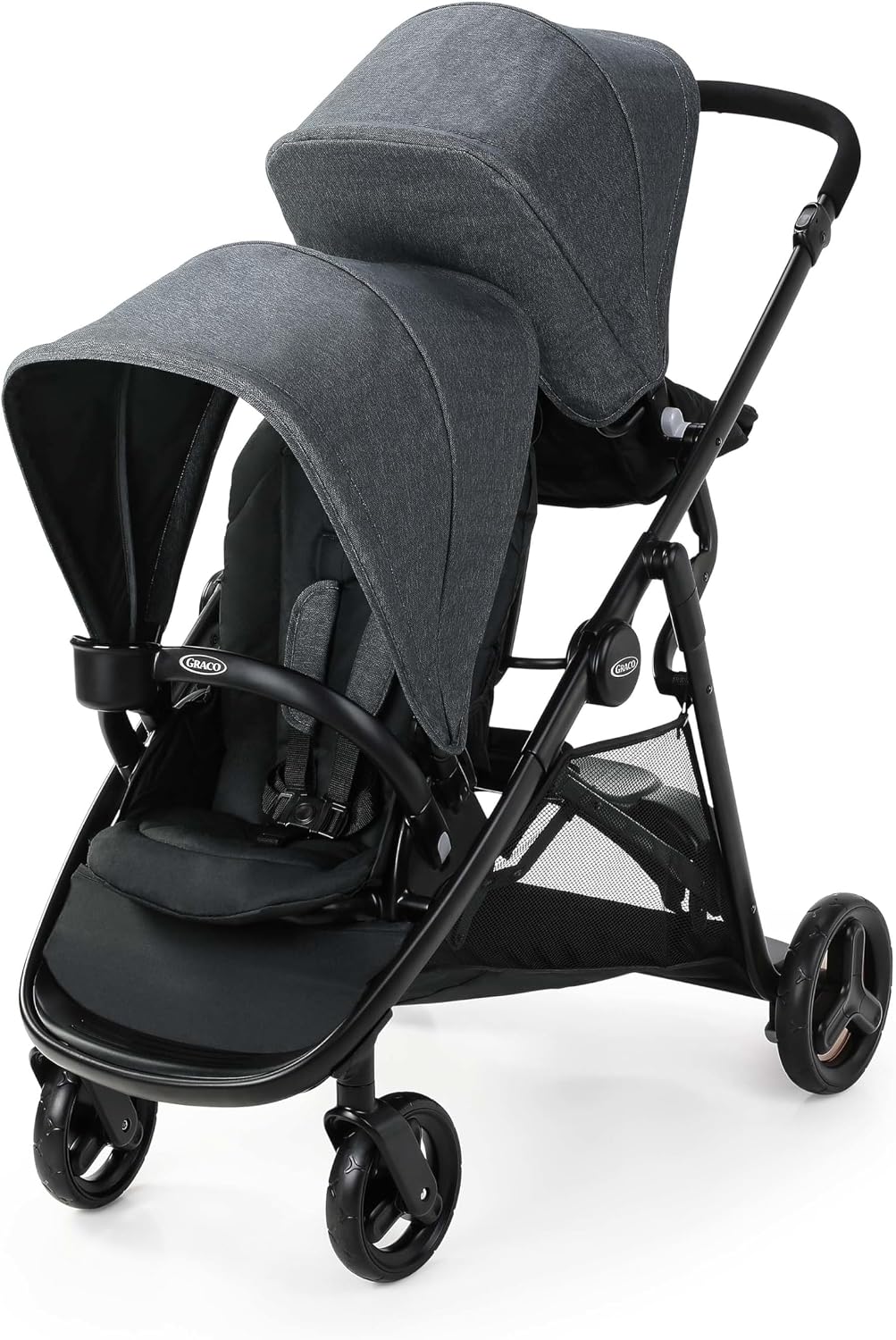
This is the one for the household with a baby and a preschooler, and the bench seat plus standing platform is the reason. A double stroller that only offers two full seats forces a four-year-old into a bucket they have decided they are too big for. A bench and a standing platform let that kid ride when they are tired and walk when they are not, which is how the June gauntlet actually goes: thirty unsupervised minutes of folding, dragging, climbing, and spilling, and whatever survives gets marked toddler-proof.
Standing platforms are also where you find the design failures. A platform that flexes under a forty-pound kid, or a bench that pinches fingers when it drops, is worse than no platform at all, because the child trusts it. So put your own hand where your kid's hand will go, and press down hard on the platform edge before you buy.
The compact fold claim is the other thing to test honestly. Every double stroller says compact, and compact is relative to other doubles. Bring your tape measure to the store, fold it, and hold the number against your actual trunk with the groceries already in it. That is the test that decides whether a double stroller becomes furniture you drag around or a tool you use daily.
Best for Small Trunks: Joie Nutmeg Compact Lightweight Travel Stroller
The Nutmeg is the outlier in this group: no car seat, no modular system, just a compact travel stroller with a one-hand fold. That is the point. If your trunk is a 2012 Ford Fiesta like mine, or your hallway is narrow, or you take the bus, the question is not how many configurations a stroller has. The question is whether you can fold it with one hand while the other arm is holding a sleeping toddler, and whether the folded package shares trunk space with a week of groceries instead of eating all of it.
Here is where my prediction engine earns its keep. Fold mechanism type is one of the three cheap signals I use before a full 100-fold test, and single-action folds beat multi-step folds on degradation almost every time. Fewer steps, fewer joints, fewer things to loosen. A one-hand fold is a single-action mechanism by definition, so I go into a stroller like this expecting the latch to still feel like a latch at fold #100.
The honest limit is terrain. A lightweight compact is built for pavement, transit, and car trunks. On the Ellie loop's gravel shoulder, small wheels and light frames are loud and busy, and a stroller with a narrow wheelbase is not the one I would choose for broken sidewalks every day. Buy it for the trunk, not for the trail.
How I tested
Every stroller that gets a full review here goes through the same protocol, and none of them are borrowed. Everything is bought at retail, which is slower and more expensive and the only way I know to stay honest.
The 100-fold test runs with a Casio stopwatch. I record the time at fold #1 and the time at fold #100, and I note the fold where the mechanism first changes character: a new rattle, a latch that needs a firmer push, a release that stops returning cleanly. That fold number is the one parents live with.
The Ellie loop is 2.1 miles over broken sidewalk seams, a gravel shoulder, a 1.5-inch curb-cut lip, and a rain-slick painted crosswalk, with a 22-pound weighted doll aboard. I log wheel bearing noise, brake reach for a 5'2" parent, harness strap-twist, and every pinch point I can find with a bare hand. The coffee-cup push adds a one-handed steering check with a 16-oz cup balanced on the handlebar for 100 yards.
Then the June gauntlet: thirty unsupervised minutes with a three-year-old. Survivors get marked toddler-proof. I am past 250 logged sessions and closing in on 110 strollers.
Analysis and test results
Three signals predict how a stroller will hold up before I finish the protocol, and the spreadsheet has backed them up on the large majority of the strollers I have tested.
The first is the gap between claimed and measured weight. A stroller that lists lighter than my luggage scale records is usually a stroller with thinner materials somewhere you cannot see. When the box says 26.5 and the scale says 28.4, that gap is a build-quality signal, and it shows up later in wobble and flex.
The second is fold mechanism type. Single-action folds degrade better than multi-step folds, full stop. That is why the one-hand fold on a compact like the Nutmeg is worth paying attention to, and why a multi-step travel system fold is the part I would inspect hardest on the Element and the Nest.
The third is wheel bearing smoothness on gravel. A stroller that rattles on the Ellie loop's gravel shoulder at month one will rattle louder at month twelve. Wheels are also the hardest part to replace and the easiest to ignore in a showroom, because showroom floors are smooth and forgiving.
None of that tells you which stroller to buy. It tells you what to check when you are standing in the aisle with your tape measure.
The reference table
This is how I keep the four straight when parents ask me which one. Fold style and configuration come from the product itself; the watch-for column is what I would verify in person before buying.
| Stroller | Best for | Configuration | What to check first |
|---|---|---|---|
 Visit on Amazon → Visit on Amazon →Graco Modes Element Travel System |
A first baby, one child | Infant car seat plus reversible stroller seat | Fold it ten times, then check the latch |
 Visit on Amazon → Visit on Amazon →Graco Modes Nest Travel System |
A growing family, one child at a time | 3-in-1 modular with sliding car seat carrier | Confirm every position still locks firmly |
 Visit on Amazon → Visit on Amazon →Graco Ready2Grow 2.0 Double Stroller |
A baby plus a preschooler | Double with bench seat and standing platform | Press the platform hard and check for pinch points |
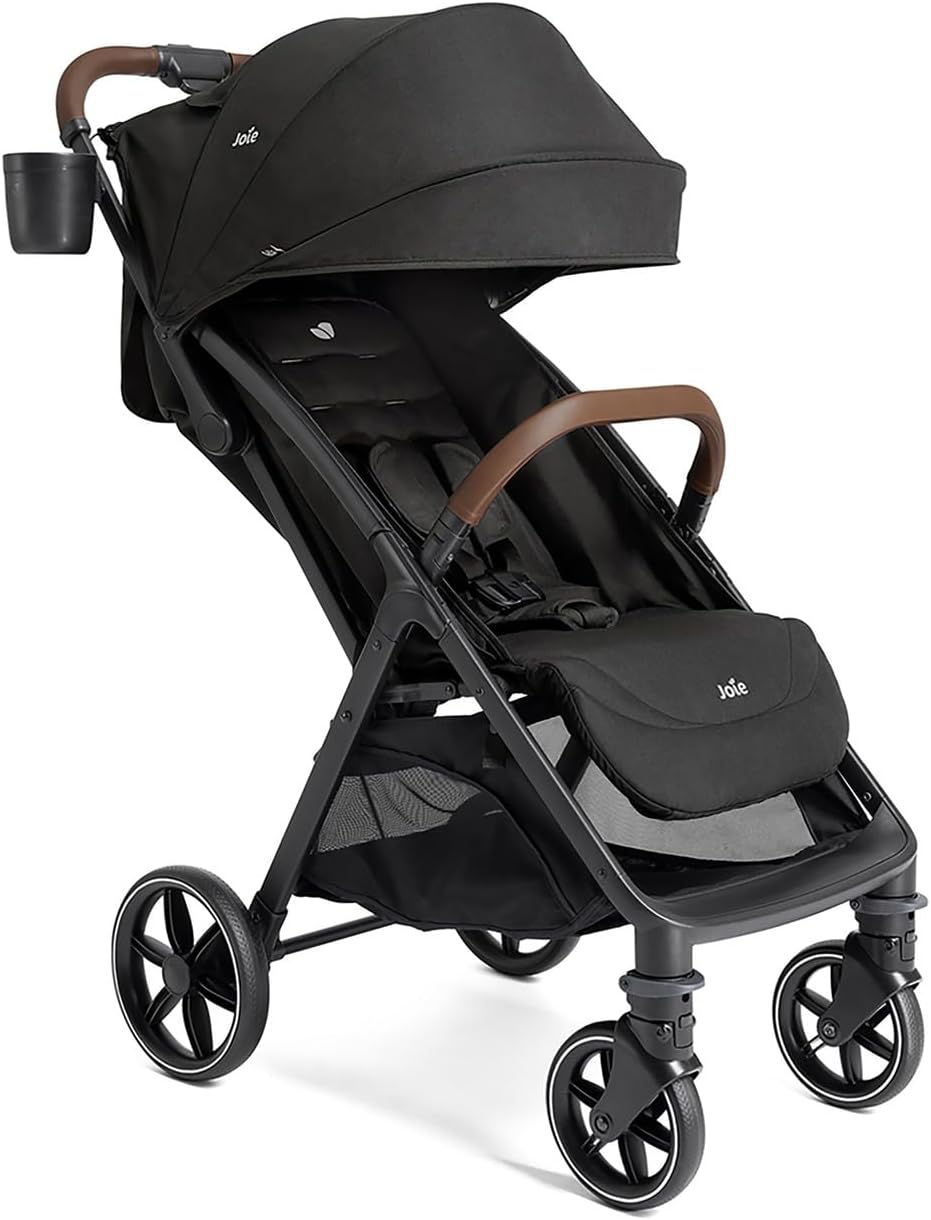 Visit on Amazon → Visit on Amazon →Joie Nutmeg Compact Travel Stroller |
Small trunks, transit, travel | Single compact stroller, one-hand fold | Fold it with one hand and measure the package |
The pattern in that table is the same pattern I see in the graveyard spreadsheet: the simpler the mechanism, the less there is to go wrong, and the more specific the job, the better the stroller does it. A travel system is a compromise that buys convenience. A double is a compromise that buys capacity. A compact is a compromise that buys space. Pick the compromise that matches your week, not the one with the longest feature list.
Should you buy the Graco Modes Element Travel System?
Yes, if this is your first baby and you want one purchase that covers the first year. You get the SnugRide Lite LX infant car seat and a stroller seat that reverses, which is the feature parents undervalue until they are pushing a newborn away from them. Verify the fold in person first, and hold the folded footprint against your actual trunk with a tape measure. Then check the recall databases, because that step costs nothing and I never skip it.
Should you buy the Graco Modes Nest Travel System?
Yes, if you want one stroller that keeps changing shape as your family grows. The Slide2Me carrier slides between positions, which is genuinely useful if you are shorter or if you want the baby closer to your hands, and the 3-in-1 progression means it does not get outgrown in a year. Just be honest about the complexity. More configurations mean more joints, so test every position in the store and listen for anything that does not lock cleanly.
Should you buy the Graco Ready2Grow 2.0 Double Stroller?
Yes, if you have a baby and a preschooler who has decided they are too big for a seat. The bench seat and standing platform let that older kid ride when they are tired and walk when they are not, which is how real walks actually go. Check the platform with your own hand before you buy, because a platform that flexes or pinches is worse than none at all. And measure the folded package against your trunk, groceries included.
Should you buy the Joie Nutmeg Compact Travel Stroller?
Yes, if your trunk is small, your hallway is narrow, or you ride transit. The one-hand fold is a single-action mechanism, and single-action mechanisms are the ones I expect to still feel right at fold #100. It is a pavement stroller, though. If your daily route is gravel shoulders and broken sidewalk seams, this is not the one, and I would rather tell you that than sell you a stroller you will resent by spring.