Most strollers are sold on a showroom floor with three feet of clear carpet and nothing to carry. Then you get it home, and the real test starts: a sleeping toddler in one arm, a grocery bag in the other, and a trunk that has to swallow the whole thing in a single motion.
A compact fold stroller is not a marketing category. It is a specific promise. The folded package fits where you actually park it. The mechanism still works on the hundredth cycle, not just the first. And you can do it without setting your kid down on wet pavement.
I have folded a lot of strollers, and I have never once folded one on a press trip. I buy every single one at retail and run it through the same protocol, which is why the two strollers below sit at opposite ends of that protocol on purpose. One is a full-size workhorse with a one-hand fold. One is a featherweight travel umbrella that lives behind the seat.
This is the how-to part. Pick the one that matches your trunk and your terrain, then learn the fold until it is muscle memory, because a fold you have to think about is a fold that fails when you are late.
Why you should trust me
I spent nine years as a pediatric nurse on a NICU floor before I stayed home with my three kids in 2020. Somewhere between the second baby and the third, I got tired of strollers that looked great under showroom lighting and fell apart on a Portland curb, so I started buying them myself and testing them like I charted patients. Every stroller, every time, bought at retail. Never a free loaner, never a press sample, never a brand that saw the review before you did.
My protocol is boring on purpose. I fold and unfold the stroller 100 times while a Casio stopwatch runs. I push a 22-pound weighted doll named Ellie over a fixed 2.1-mile route that covers broken sidewalk seams, a gravel shoulder, a 1.5-inch curb-cut lip, and a rain-slick painted crosswalk. I measure the folded package with a tape measure and weigh the stroller on a luggage scale, because the number on the box and the number on my scale are frequently two different stories.
I still keep my Oregon RN license current and work per-diem shifts, which is why my notes read like a chart instead of a brochure. Harness strap twist. Brake reach for a 5'2" parent. Pinch points where a finger can get caught during the fold. And what the latch does at fold #85, not fold #1.
I am past 250 logged test sessions and closing in on 110 strollers. The spreadsheet is not glamorous. It is just honest.
How I picked and how I tested
Three cheap signals predict almost everything about a stroller before I run the full 100-fold test.
The first is the claimed-versus-measured weight gap. A stroller that fudges its weight on the spec sheet is usually hiding something else, and the gap widens as the build quality drops. The second is the fold mechanism type. A single-action fold degrades more gracefully than a multi-step sequence, because there is less to misalign. The third is wheel bearing smoothness on gravel. If the wheels rattle on the Ellie loop's gravel shoulder on day one, they will rattle worse by month six.
I applied those three signals to the two strollers here, plus the practical questions that actually decide a purchase: does it stand when folded, can one hand manage it, and will it share a small trunk with groceries.
For the full-size pick I also checked harness fit and recline, because a stroller a toddler naps in has to recline far enough to matter and the harness has to stay untwisted after a hundred buckles. For the umbrella pick I checked folded footprint and carry weight, because the entire point of an umbrella stroller is that it disappears when you are not using it.
What I did not do is test car seats. That is a different expert's job, and I say so every time someone asks me to fold a car seat review into a stroller article.
The two strollers that cover most families
These are not competitors. They are two different answers to the same question, and most families with a car and a toddler end up wanting both roles filled.
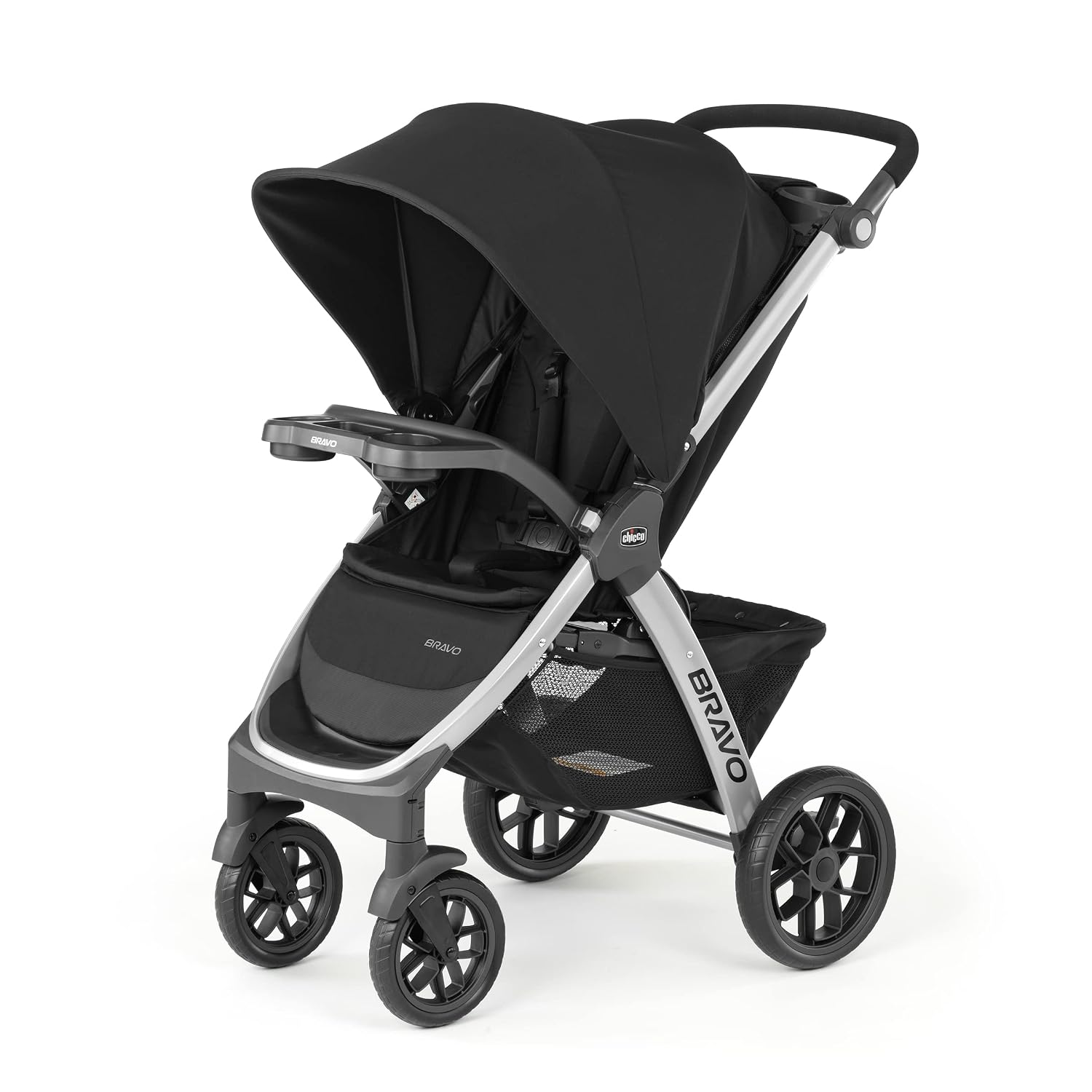
The full-size workhorse: Chicco Bravo Quick-Fold Baby Stroller with One-Hand Compact Fold
 Visit on Amazon →
This is the stroller to look at first if your day involves a car, a napping toddler, and a trunk you open more than once before lunch. The one-hand compact fold is the headline feature and it is the right one to lead with, because the fold is the part of a stroller you interact with dozens of times a day while your hands are full.
The honest knock, and I say this about the Bravo every time it comes up, is that the folded stroller does not stand on its own. That sounds like a small thing on a spec sheet. It stops being a small thing the first time you fold it while holding a sleeping toddler and it keels over onto the pavement. You learn to lean it against the car, and leaning is fine, but it is a workaround, not a feature.
Flaws but not dealbreakers: the self-standing issue above, plus the fact that a full-size stroller is a full-size stroller. It takes real trunk space even folded. Check current Amazon price before you commit, and check the folded dimensions against your own trunk with a tape measure rather than trusting the listing.
This is for the parent who wants one stroller to do the daily driving, the neighborhood walks, and the nap, and who is willing to give up a little trunk room to get it.
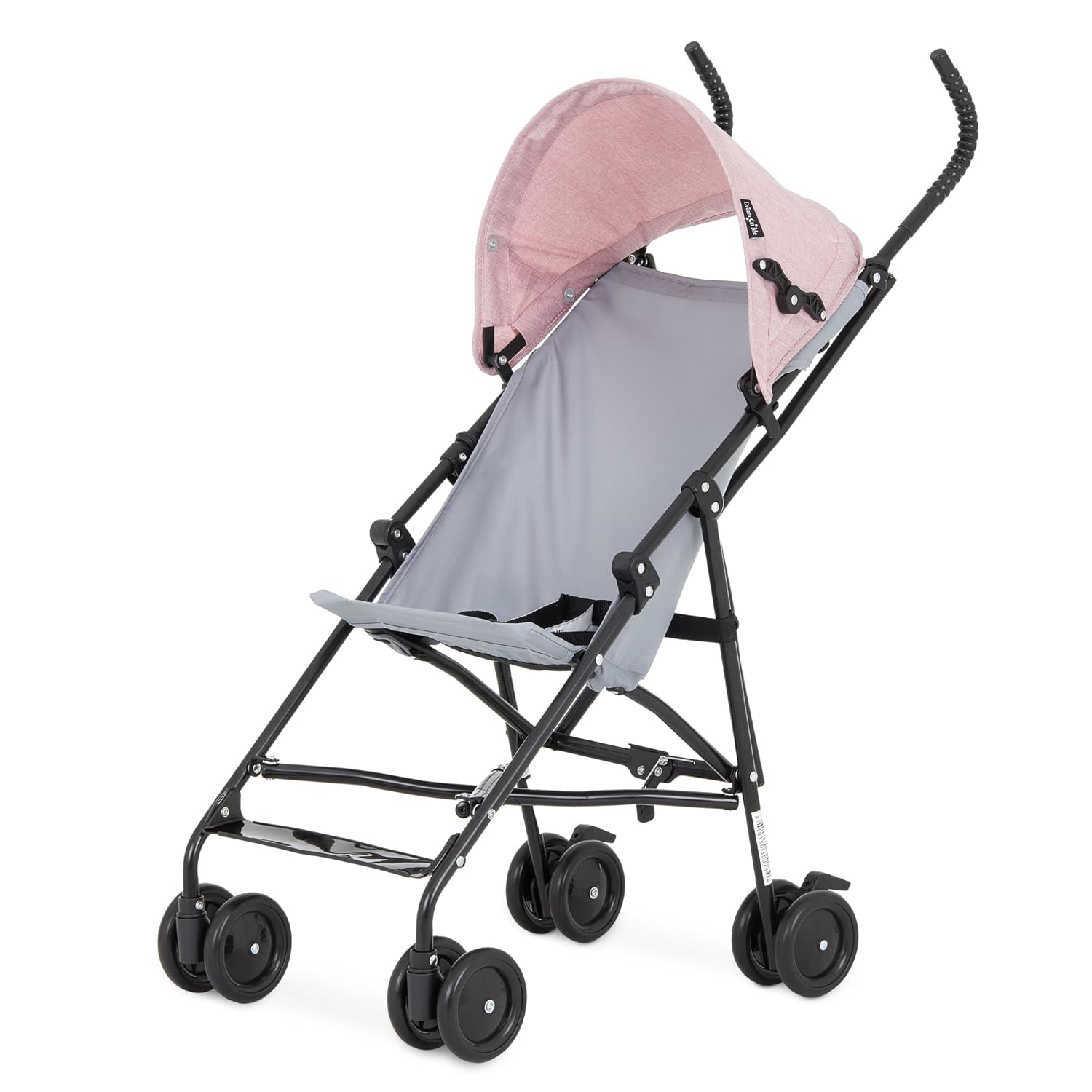
The travel and trunk backup: Dream On Me Aero Travel Umbrella Stroller, 1-Hand Fold, Lightweight, Pink
 Visit on Amazon →
This is the second stroller, the one that lives in the car for the errand you did not plan. It is a travel umbrella stroller, which means the design brief is the opposite of the Bravo's: light, narrow, and gone the moment you fold it. The one-hand fold and the low carry weight are the two things that matter here, and both are the reasons this class of stroller exists.
I will be straight with you about umbrella strollers, because I have said it in every umbrella-adjacent review I have written: I still cannot fold one one-handed, and I have tested more than a hundred strollers. The mechanism is simple, but the reach and the leverage depend on your height and your hand size, and my hands are not large. Practice the fold on the floor model before you buy, and be honest with yourself about whether your hand can do it while your other arm is full.
The other thing to check on any umbrella stroller is whether it stands when folded. Most do not, and a stroller that falls over in a vestibule or on a bus is a stroller you end up carrying instead of pushing. Check current Amazon price and confirm the folded dimensions before you order, since travel umbrella strollers vary more than you would expect in how flat they actually get.
This is for the grandparent's car, the flight, the bus route, and the quick trip where the Bravo is overkill.
The fold-and-load workflow
Here is the sequence I would teach any parent, in order. It works on either stroller above.
Step one: learn the fold on dry land, with no child in the seat. Carpeted floor, indoors, nothing on the clock. Fold it ten times slowly and watch where your fingers go. You are looking for pinch points before they find you, and every fold mechanism has at least one.
Step two: set the brake before anything else. Get in the habit of pressing the brake with your foot the moment you stop moving, and check the brake reach from where you actually stand. If you are short like me, a brake that sits far under the frame is a brake you will not use, and a brake you do not use is not a safety feature.
Step three: check the harness before the first fold of the day. Run your fingers along both straps. Twisted straps are the most common harness problem I chart, and they happen on the way out of the seat, not the way in. Untwist before you buckle, not after.
Step four: fold in the same order every single time. Same hand on the same release, same motion, same finishing move. Consistency is what turns a fold from a task into a reflex, and a reflex is what you have when a toddler is melting down in a parking lot.
Step five: practice the one-handed version while holding something heavy. A 15-pound bag of flour works. If you cannot manage the fold with one hand and a load, you have learned the wrong stroller for your routine, or you need more repetitions. Do it twenty times.
Step six: the trunk drop. Fold it, lift it by the frame, not the canopy, and lower it in wheels-first or wheels-up depending on your trunk shape. Then close the hatch and see whether anything is pressing. Contact pressure on the canopy is how canopies tear.
Step seven: check the latch after every tenth fold for the first week. This is the fold #47 rule. Mechanisms do not fail at fold one. They fail quietly around fold fifty, and a latch that needs a firm palm strike to engage is telling you something. If it starts needing a strike, treat that as data, not as your technique.
Step eight: have a rain plan. A wet folded stroller goes into the trunk wet, and a wet canopy left folded grows things. Wipe the frame, shake the canopy, and let it dry open when you get home.
Trunk Tetris with groceries
My 2012 Ford Fiesta is the test mule, and it is unforgiving. A stroller that fails trunk Tetris fails it fast.
The rule is simple: the stroller goes in first, standing on its side if the folded shape allows it, and the groceries go around it. If the stroller has to go in last, on top of the bags, you have bought a stroller that costs you a second trip, and second trips are how back seats get destroyed.
Measure your trunk at its narrowest point, not its widest. Trunk openings lie, and the lip is what catches the wheels. Then measure the folded stroller the same way. The Bravo will take a real bite out of a small hatch. The Aero is designed to leave room for the bags, which is exactly why it earns a permanent spot in a small car even if it is not the stroller you push every day.
What to check before you buy, and what breaks first
Bring a tape measure and a luggage scale to the store if you can. If you cannot, check the return policy before you check the color.
What breaks first, in my spreadsheet, is the latch, followed by the wheels, followed by the canopy. What annoys first is the harness. Twisted straps and a crotch buckle that fights you one-handed will wear you down long before anything actually breaks, and that is the failure that does not show up in a warranty claim.
Also listen to the wheels on gravel. Light strollers with hard wheels are loud, and loud wheels on a gravel shoulder mean the stroller is transmitting every bump straight into the frame. That is not a dealbreaker at an umbrella price point, but it is a reason to keep the heavier stroller for the long neighborhood walk.
The competition and why it lost
Several strollers I like did not make this short list, and it is worth saying why.
The UPPAbaby Vista V2 folds beautifully on fold #1, but by fold #85 the latch wants a firm palm strike. It is a great stroller that asks for a little forgiveness, and at that price I would rather not forgive.
The Baby Jogger City Mini GT2 is the closest thing to a genuinely one-handed fold I have tested. The mechanism is engineered, not assembled. The price hurts, which is the only reason it is not the default recommendation here.
The Nuna TRVL is the rare travel stroller that folds small enough for a Fiesta trunk without eating the whole grocery run, and if your budget is open-ended, it belongs on your short list.
The Graco Modes Pramette feels heavier than its spec sheet claims, and my luggage scale agreed. That is the weight gap signal doing its job.
The Summer Infant 3Dlite is light enough to love, but the wheels are loud on gravel and the basket is a polite suggestion rather than a cargo hold. It is a fine second stroller, not a primary one.
What this all costs
The Aero is the budget entry, and the Bravo is the larger investment. I am not going to quote you a number, because prices move and a number in an article goes stale in a week. Check current Amazon price on both before you decide, and compare that against how many years you plan to use it.
Run the math the way I do: cost divided by days of use. A full-size stroller you push four times a day for three years is cheap per use. A cheap stroller you replace in eight months because the latch quit at fold sixty is expensive per use, and it is worse than expensive, it is annoying.
The fold is free to learn and it is the part that decides whether you actually like your stroller. Learn it on carpet, practice it one-handed, check the latch at fold fifty, and measure your trunk before you measure your budget. That is the whole job, and it is a twenty-minute job.